
Getting someone out: $80–$180
Standard Sydney call-out for after-hours attendance. Ask before booking, not after the invoice.
A burst pipe at 2am does not wait for business hours, and neither do we. One call reaches a licensed plumber rather than an answering service, and a crew is dispatched to Potts Point with the gear to stop the problem rather than look at it.
After-hours work is not the same trade as daytime work. The parts have to be on the van because no supplier is open, the diagnosis has to be right first time because there is no second attendance that night, and the person answering the phone has to be able to tell a genuine emergency from something that is cheaper on Monday.
That last part matters more than it sounds. Telling you a job can safely wait costs us the callout and saves you a premium, and it is the fastest way to know whether the outfit you have rung is worth using again.

The suburb’s celebrated art deco blocks along Macleay Street run dozens of flats into original cast iron and clay stacks, where scale, wipes and grease build into stubborn blockages.
In a block, a single blockage low in the stack shows itself in whichever apartment sits lowest — which is frequently not the apartment that caused it. If your ground-floor shower is backing up when the neighbours run water, the line is telling you the problem is downstream of all of you.
That is worth knowing before anybody starts apportioning blame or cost. A camera up the stack settles it in twenty minutes, and the footage is what the strata manager needs to act on rather than a description of what somebody saw.
The genuine emergency in an older home is often not the size of the fault but the lack of an alternative. A single bathroom out of action with a family in the house is a call-out, whatever the textbook says about severity.
Victoria Street’s Victorian terraces still drain through their first clay lines, cracked by time and root intrusion from the street’s famous plane trees.
We treat it that way. If it is the only toilet, it goes to the front of the queue — and if we can talk you through getting it usable tonight so the visit can happen at daytime rates tomorrow, we will do that instead and say so on the phone.
Grease does not block a line suddenly. It narrows it over months, and the failure arrives on the night of the highest load — a full service, a function, a long weekend.
The dining strips around Macleay Street and Llankelly Place send heavy fat loads into narrow shared sewers, which congeal and choke the lines.
That is why the useful question after a commercial blockage is not what went down the sink tonight, but when the trap was last pumped and the line last jetted. We will give you both dates from what the camera shows, and a realistic interval to keep to.
Ground close to the water holds more of it, sits lower, and moves more than ground further up. Over decades that shows up in the drainage as joints that have opened slightly, falls that have flattened, and lines that silt where they once ran clean.
Stormwater tears down the escarpment toward Woolloomooloo and Rushcutters Bay in heavy rain, overloading old stormwater lines on the slopes.
None of that is an emergency by itself. It is the reason an emergency here often turns out to be the last stage of something that has been developing quietly, and why the camera run after the clear is worth more than the clear.
Potts Point crowns a sandstone ridge in Inner Sydney (postcode 2011), wedged between Elizabeth Bay, Rushcutters Bay and Woolloomooloo, famous for its art deco apartment buildings and tree-lined Victoria Street terraces. Dense living on century-old pipework makes it one of the busiest blocked-drain suburbs we service.
On sloping ground the problem is rarely where the symptom is. Water leaves a failure at the highest point and surfaces at the lowest, which can be several properties away and well downhill of anything you would think to look at.
It is also why a neighbour's overflowing gully is sometimes your blocked line, and occasionally the reverse. We work uphill from the symptom rather than digging where the water appears.
Standard Sydney call-out for after-hours attendance. Ask before booking, not after the invoice.
Roughly $120–$160 in daylight. Someone is out of bed and on the road, and the rate reflects it.
Where most single-fault after-hours jobs land once attendance, labour and small parts are counted.
Slab leaks, gas line work, anything that means opening a wall overnight. You approve the figure first.
We would rather book you for Monday at daylight rates than take a premium for a job that was never urgent.
These are market ranges, not our quote. You hear your number first and decide with it in front of you. Figures here are indicative of the 2026 Sydney market rather than a quote from us, you get your own number as a fixed price before any work starts.

Before any booking, the person on the phone tells you what to isolate. That call is where most of the damage is either prevented or done.
You are told when someone can actually be there, not a number designed to keep you on the line. If that is ninety minutes, it is ninety minutes.
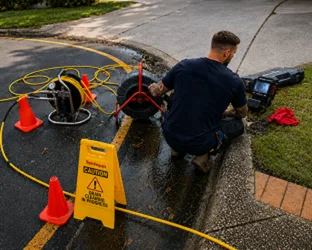
Stop the water, make the area safe, find the cause. Only then does a price get put in front of you, and nothing starts until you have agreed it.

Finished on the night wherever the parts allow. Where they do not, you are left watertight and usable, with the return booked before we leave.
Call and describe it. If it can hold, we will tell you, and book you at daytime rates. If it cannot, you will be glad you rang tonight.
Cost, response times, and what actually counts as an emergency.

Call for the fastest response, any hour. Or send the form, after-hours enquiries get a callback from the on-call plumber, not an inbox.

Leave your details and our local Potts Point team will call you back fast.